

Nutritional Properties of Eggs and Diet in Laying Hens

Follow us on Instagram
In celebration of World Egg Day, an initiative promoted by the International Egg Commission, held on the second Friday of October each year to raise awareness about the benefits of eggs and their importance in human nutrition, Tecnozoo has decided to present the following article discussing the nutritional properties of eggs and how animal nutrition is crucial for maintaining the optimal quality of this product.
Eggs are a versatile food rich in nutrients.
Known primarily as food, they are also used in the pharmaceutical industry, cosmetics, and biotechnology.
Learn more about Tecnozoo’s poultry products
Nutritional Properties of Eggs: Proteins
Eggs are a concentrate of high biological value proteins.
Biological value is an index that expresses, through a numerical value, the ability of a protein to meet the body’s amino acid needs, referring to the quantity, quality, and reciprocal ratio of essential amino acids present in the proteins that make up the food.
Eggs are attributed a biological value of 100, such that egg proteins are used by nutritionists as a reference point for evaluating the biological quality of other protein foods.
Egg proteins are rich in essential amino acids and are located not only in the egg white, as is often mistakenly thought, but also in the yolk, where they are associated with fats to form lipoproteins. The protein content of the egg white is about 13%, while the yolk contains approximately 16.5% proteins.
Nutritional Properties of Eggs: Lipids
Lipids are concentrated more than 99% in the yolk, but unlike other animal-origin foods, they are rich in mono- and polyunsaturated fatty acids.
The ratio of saturated to unsaturated fatty acids in eggs is about 1:1.6-2 and depends on the fatty acid composition of the animal’s diet.
Among the lipids contained in eggs, cholesterol is also noteworthy.
Eggs contain a significant amount of cholesterol; however, this does not make them an unhealthy food.
Several studies have shown that dietary cholesterol does not affect blood cholesterol levels, so eating two eggs a day does not cause significant changes in cholesterol levels.
For years, misinformation has led to the belief that eggs are an unhealthy food, and World Egg Day aims, as do we, to correctly inform readers about the true nutritional properties of eggs.
Nutritional Properties of Eggs: Vitamins and Minerals
Eggs are an ideal source of vitamins and minerals.
Eggs are the richest food source of vitamin A and second only to cod liver oil in vitamin D content.
The fat-soluble vitamins A, D, and E are concentrated in the yolk.
Minerals and electrolytes are present in both the yolk and the egg white in varying proportions.
An interesting aspect of the minerals in eggs is that they are all in organic form and therefore easily assimilable by humans.
QUALITY OF THE EGG AND HEN’S DIET: How They Affect the Nutritional Properties of Eggs
The composition of the protein profile, lipid profile, vitamins, and minerals that make up the nutritional properties of eggs is strongly influenced by the animal’s diet, so some egg producers have begun to enrich animal diets with components such as vitamin E, selenium, and omega-3-rich sources like flaxseed, to create eggs enriched with these same components.
Whether enriched or not, providing high-quality feed is essential to ensure high-quality nutritional properties of the eggs and properly supplementing the diet and supporting the well-being and health of the animal whenever needed is a priority.
This is why Tecnozoo has been committed for over thirty years to producing complementary feeds for optimal dietary supplementation.
Our experts have selected three liquid products from a wide range of poultry products to add to drinking water, which can be helpful in the daily routines of egg producers and in supporting production during the more challenging times of the cycle, such as stressful events.
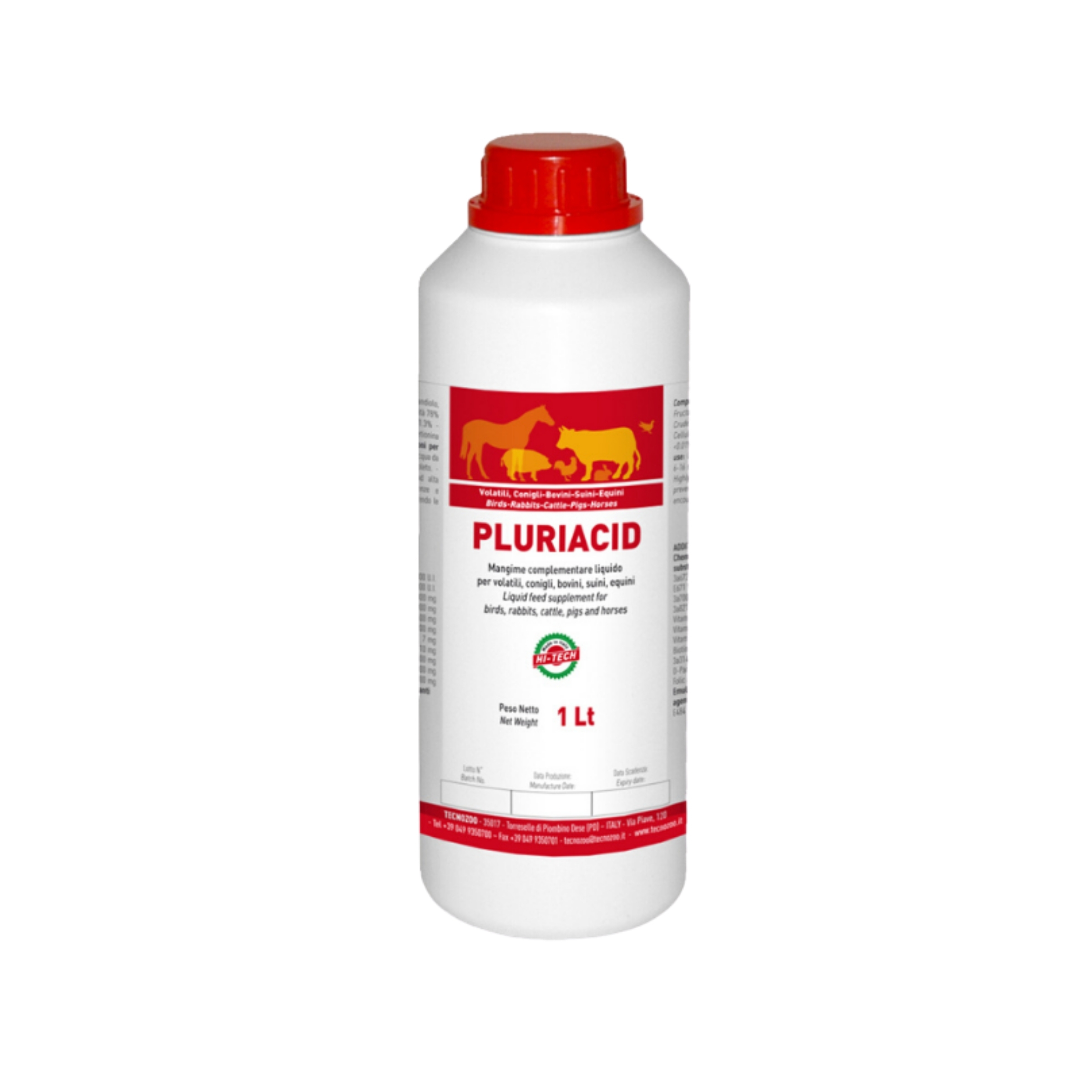
PLURIACID
The first product we present is a blend of organic acids.
The nutritional properties of eggs related to organic acids are mainly three:
- Organic acids, by lowering gastric pH, promote the enzymatic breakdown of proteins, facilitating their digestion.
- Organic acids, through an energy deprivation mechanism against potential pathogens introduced with the diet, perform an antimicrobial action.
- Organic acids promote the development of beneficial bacterial populations, modulating the intestinal microflora.
Acidifiers are commonly used in laying hens and, thanks to their properties, by enhancing feed utilization, they improve egg quality.
PLURIPOULTRY
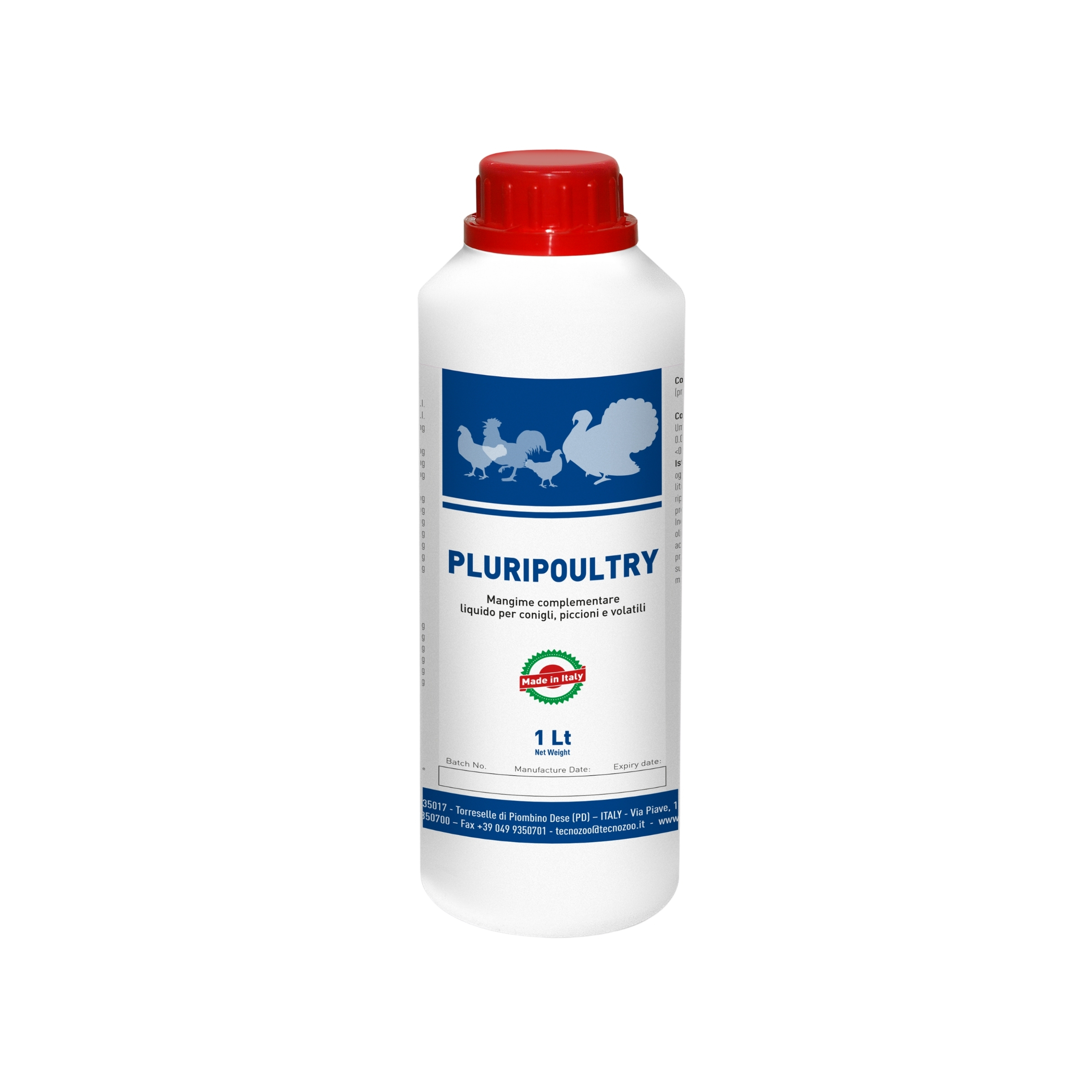
PLURIPOULTRY is a product designed to supplement the diet of animals when calcium, vitamin, and trace element needs increase, such as during periods of stress and high productivity.
Trace elements and vitamins, though required in small amounts by animals, are essential for maintaining normal bodily functions, growth, and reproduction.
They are part of the enzymatic systems of all animal metabolisms and play an essential role in maintaining animal well-being and productivity.
GLUCON PID
One of the main challenges for egg producers is not only to ensure optimal internal egg quality but also to ensure optimal shell quality.
To produce quality shells, it is necessary to provide vitamin D and suitable calcium sources to meet the high demand for shell formation, ensuring proper intestinal calcium absorption and correct bone mobilization, as part of the calcium needed for shell deposition comes from bone remodeling.
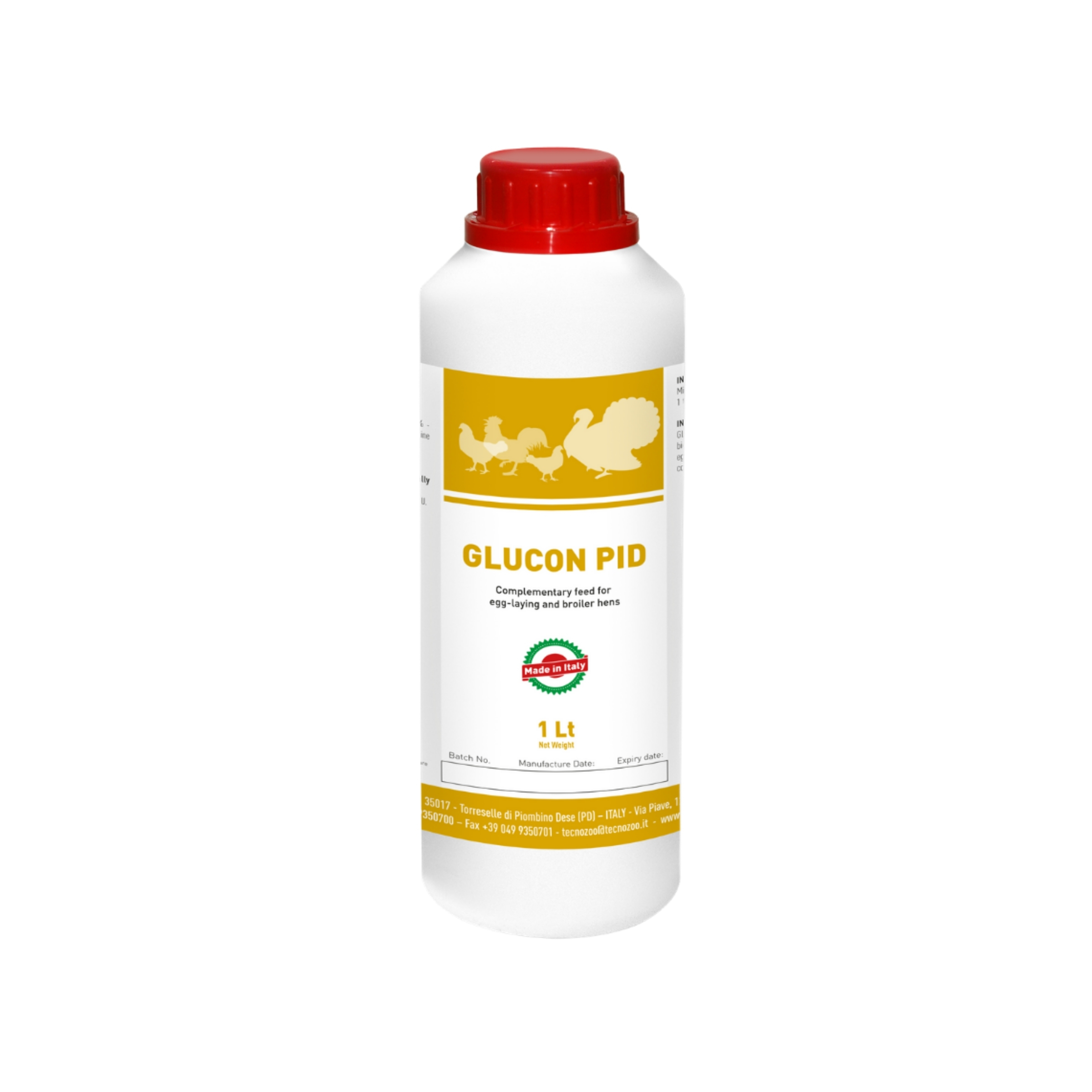
Tecnozoo, to meet these increased animal needs and support production while preserving animal well-being, has developed GLUCON PID, which contains highly bioavailable vitamin D and calcium sources.
The calcium pidolate contained in GLUCON PID acts simultaneously on shell deposition, the elasticity of its inner membrane, and bone mobilization.
The calcium pidolate molecule not only provides the calcium needed to support shell synthesis but also pidolic acid, metabolized for collagen production: a component of bone and the inner membrane of the shell.
When used correctly, these three products represent a valuable aid for those aiming to produce quality eggs by nutritionally supporting their hens to preserve animal well-being, productivity, and the nutritional properties of the eggs.
BIBLIOGRAPHY
- Jenny Chen, Shanghai Menon – “Effects of acidifier supplemented diets on egg quality and performance”
- Silvia Cerolini, Margherita Marzoni Fecia di Cossato, Isabella Romboli – “Poultry and Rabbit Farming”
- Caroline Vander Straeten – “Using vitamins to improve poultry production”