
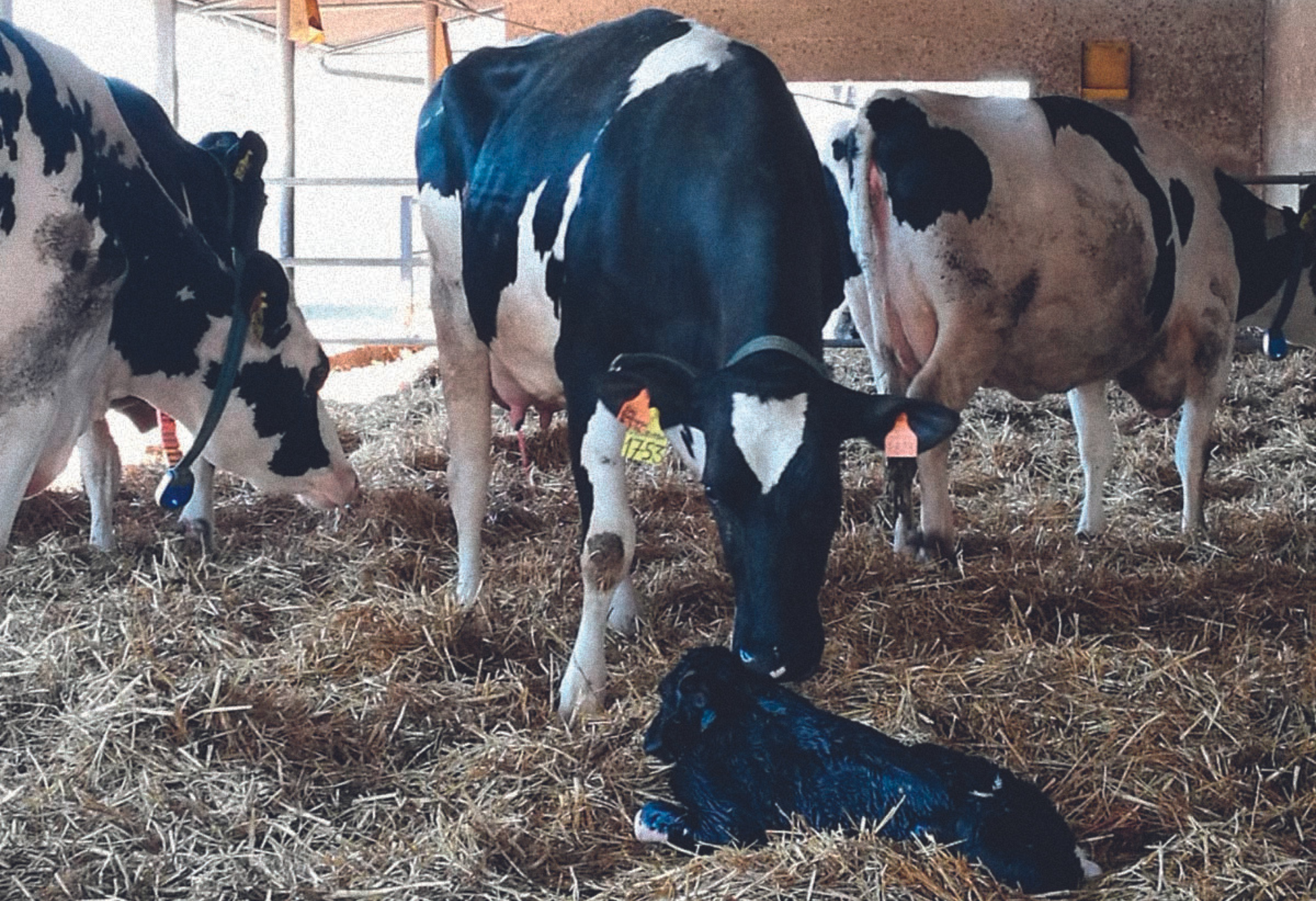
Physiological if Mild and Transitory
During parturition, the significant and sudden calcium consumption related to the expulsive phase, along with its substantial drainage due to colostrum production, results in a normal reduction of blood calcium levels in the cow, even under optimal conditions. This remains within the “physiological” range if the decrease is minor and transitory, provided that the cow quickly returns to normal calcium levels.
What Calcium Levels Can We Expect at Parturition?
Within the first 48-72 hours postpartum, the proper functioning of the homeostatic system that regulates calcium levels restores calcium values, which drop to around 6 mg/dl immediately after parturition, to physiological levels of 8-8.5 mg/dl.
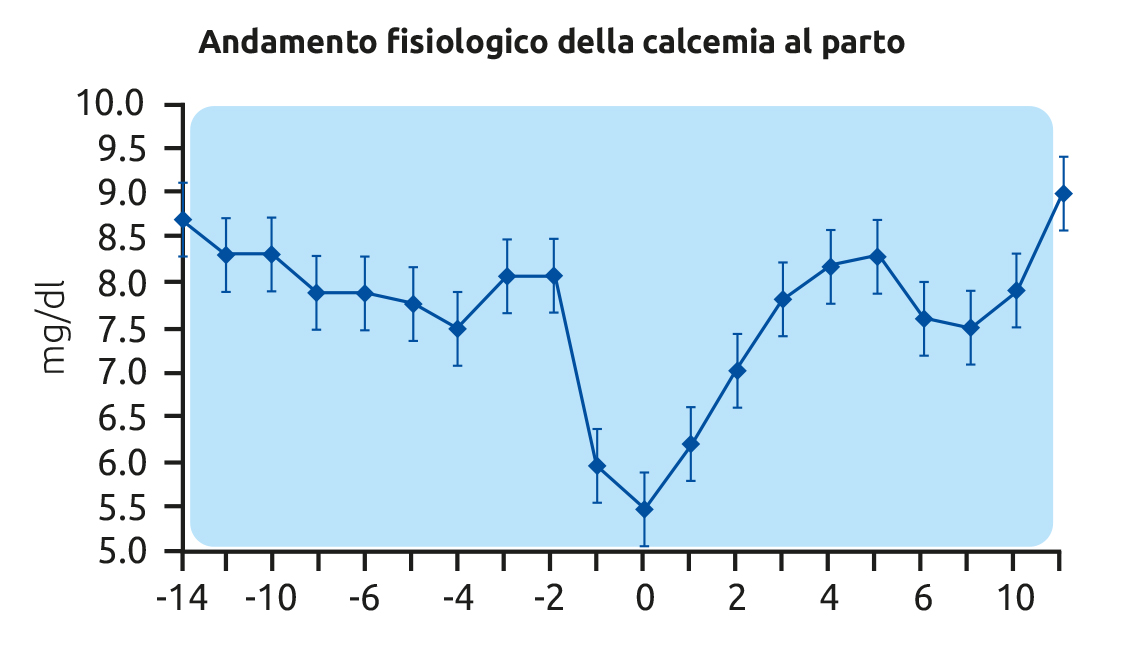
This occurs if the parathyroid hormone (PTH) – activated vitamin D3 (Calcitriol or 1,25-diOHcholecalciferol) system can optimally perform its role, which happens under these 3 conditions:
1) Proper receptor competency for PTH;
2) Complete hydroxylation of vitamin D, making it hormonally active;
3) Activation of the adenylate cyclase complex (cyclic AMP – G protein) magnesium (Mg) dependent.
How to Best Manage Calcium Levels at Parturition?
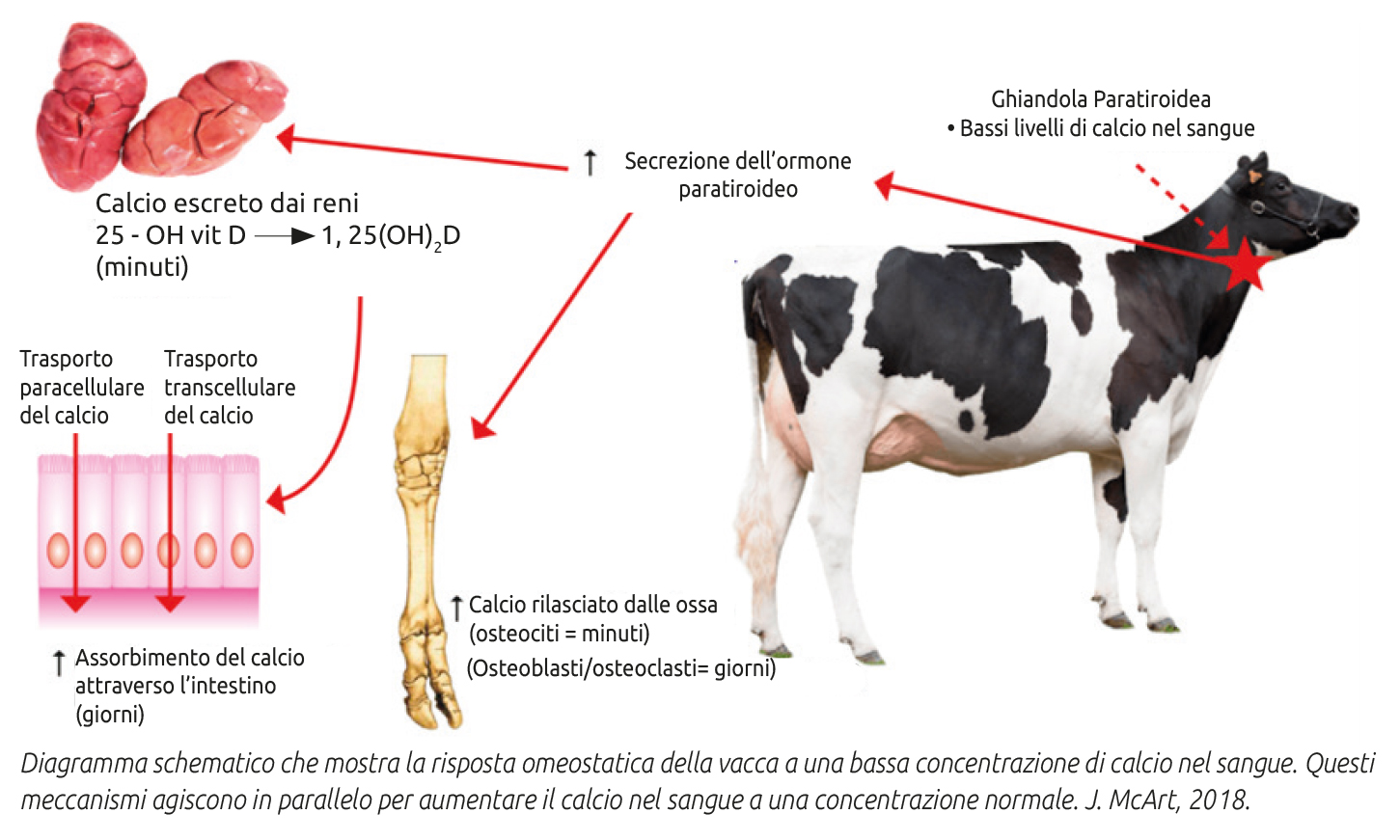
The parathyroid gland responds very quickly to decreased blood calcium levels by producing parathyroid hormone (PTH), which acts on specific cells in bones, kidneys, and the intestine to promote an increase in serum calcium levels. Essentially, PTH promotes:
1) Bone demineralization, and thus the release of calcium and phosphorus through osteoclast stimulation;
2) Renal reabsorption of calcium and excretion of phosphorus;
3) Intestinal absorption of calcium.
These effects of PTH, combined with those of vitamin D3, are achieved if there is proper conformation of the receptors for parathyroid hormone, which occurs under physiological blood pH conditions and is altered and blocked by metabolic alkalosis.
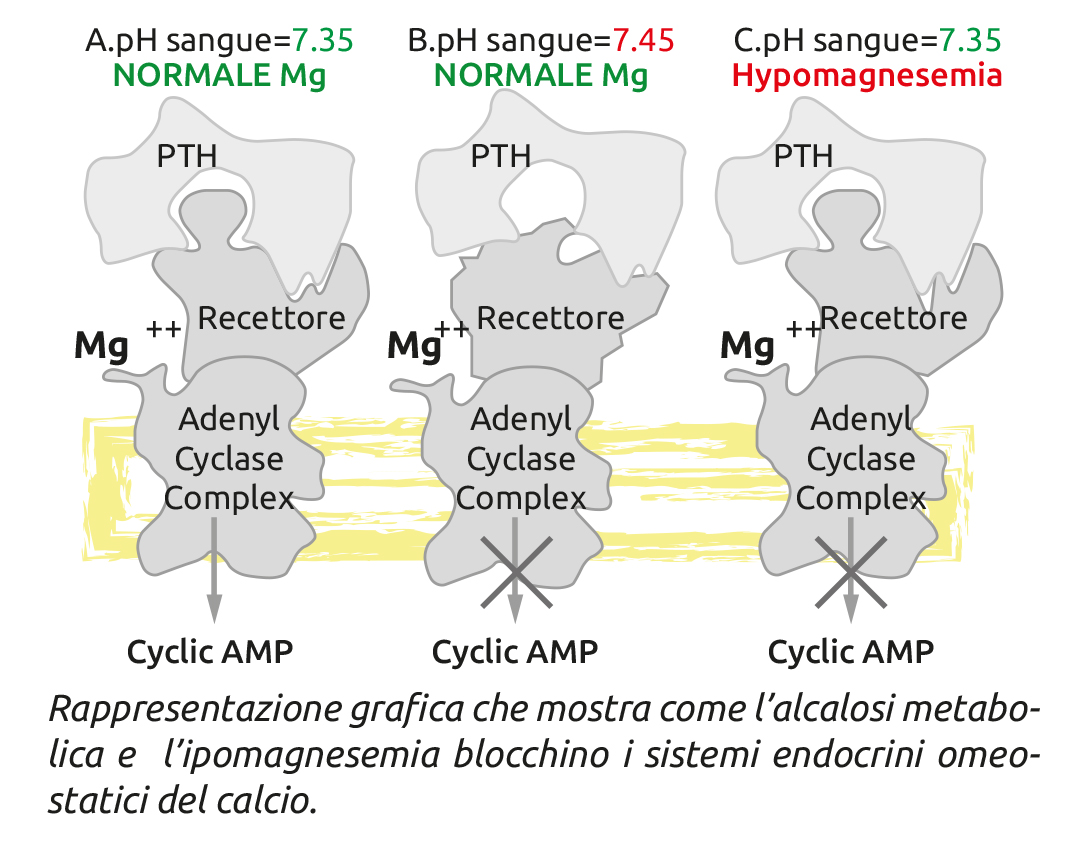
Similarly, full liver efficiency is crucial for hydroxylation and activation of vitamin D. This is also possible if magnesium levels are correct, as magnesium participates in both the activation of the adenylate cyclase-cyclic AMP complex and the formation of 1,25-dihydroxycholecalciferol.
Hence, it is absolutely important to monitor the mineral profile of the transition cow’s diet, especially potassium and magnesium (K and Mg) levels, to achieve DCAD values close to neutrality (thus avoiding alkalosis) and adequate magnesium levels relative to potassium, considering the direct competition for absorption between these two minerals in the rumen.
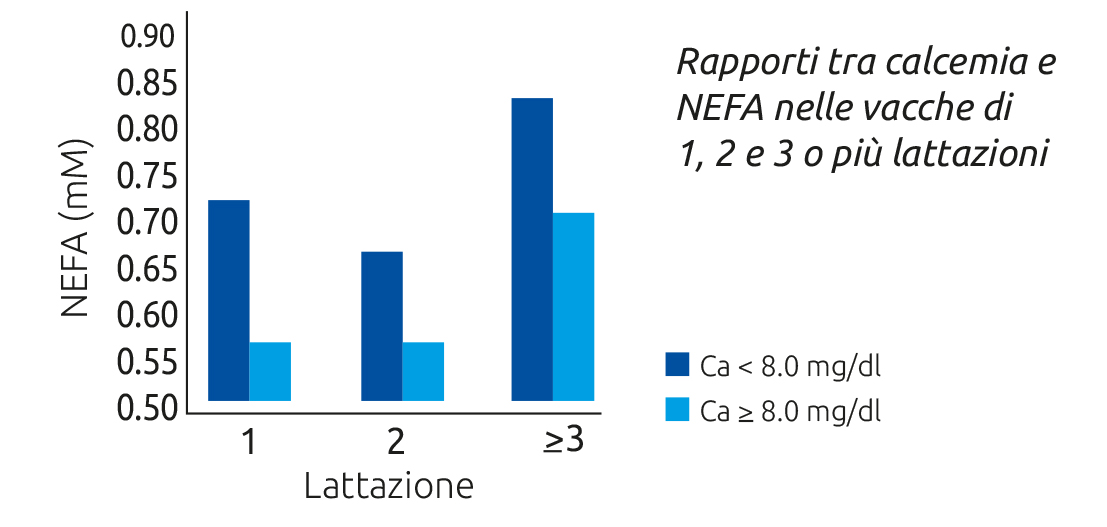
Equally important is to maintain optimal liver function during the cow’s transition period (where hepatic hydroxylation of vitamin D occurs), using lipotropic and hepatoprotective factors (such as choline, methionine, carnitine), as there is a close correlation between calcium and NEFA levels in the blood.
Calcium Supplementation at Parturition: Why, How, What, and How Much?
As previously mentioned, even under optimal conditions, parturition in the cow results in a temporary physiological hypocalcemia, which the body’s calcium homeostatic mechanisms strive to address.
Therefore, calcium supplementation at parturition is absolutely useful in supporting the body’s homeostatic mechanisms to quickly restore proper calcium levels.
Except in cases of severe clinical hypocalcemia where extremely low blood calcium levels require intravenous administration, in subclinical hypocalcemia situations, oral supplementation is not only advisable but definitely preferable. This approach avoids the risk of transient iatrogenic hypercalcemia, which is metabolically stressful and carries some cardiac risks. Additionally, oral administration provides more stable blood calcium levels post-absorption compared to intravenous administration, integrating better with calcium homeostatic systems.
The passive absorption of calcium, which unlike active absorption does not require vitamin D3, relies on the concentration gradient between the lumen and blood. This gradient is achieved only by using highly soluble and available calcium sources; these are the forms of calcium to supplement (such as calcium chloride or sulfate, organic sources like calcium acetate or lactate, or the excellent but costly pidolate).
In this case, calcium carbonate, despite being very inexpensive and more palatable than calcium chloride, is not suitable for oral administration for rapid calcium absorption due to its low solubility.
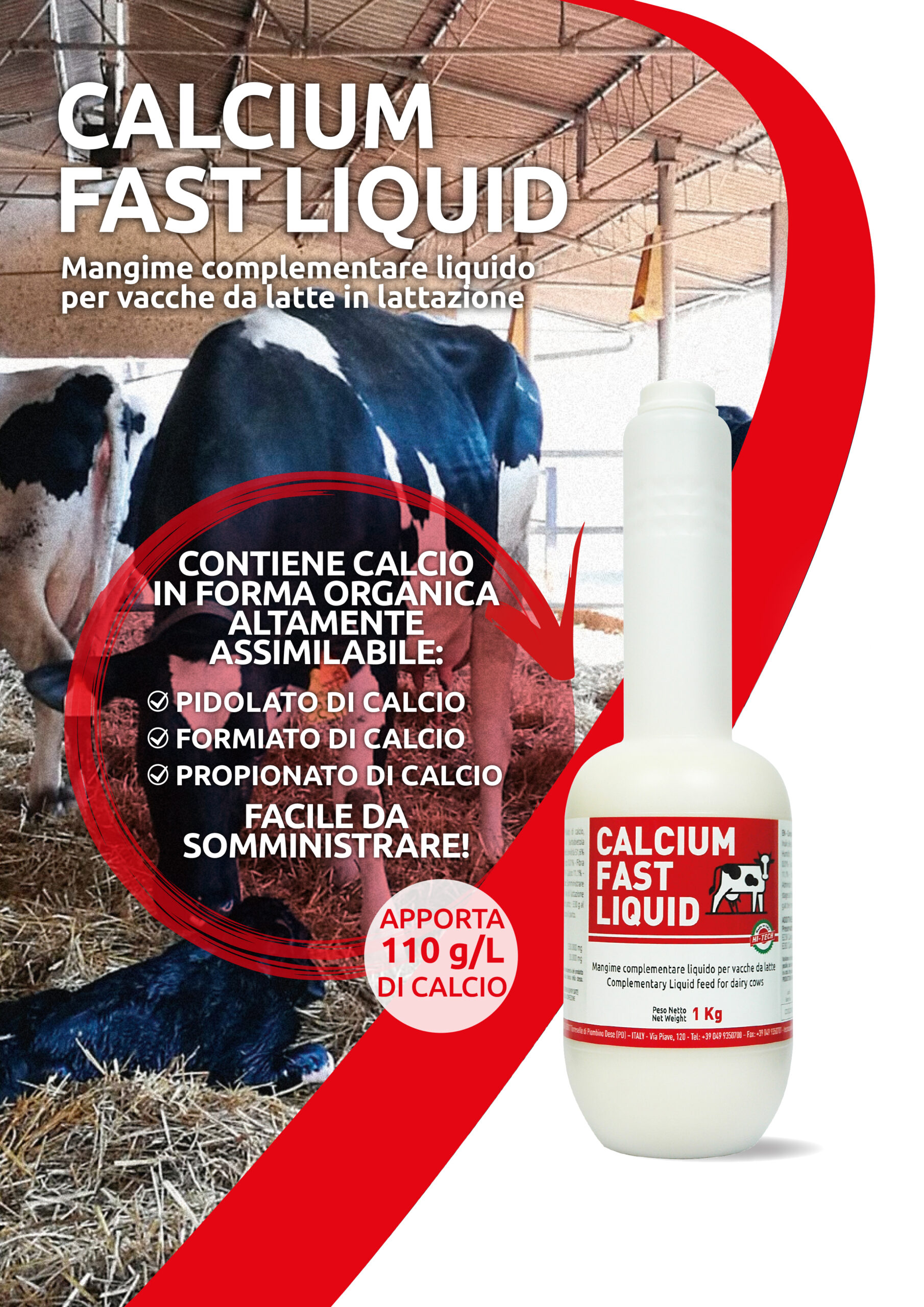
The amount of calcium to supplement for good results, using highly soluble and available calcium sources, is around 100 g of calcium. The form of administration (bolus, gel, liquid), provided it does not affect solubility, does not impact the effectiveness of the treatment.
However, the liquid form is usually much more economical, very effective, and the minimal risk of bolus ingestion, potentially associated with the administration compared to the bolus form, is eliminated with drenching using a pump.
In conclusion, we can say that oral calcium supplementation at parturition:
1) Assists and improves the rapid restoration of calcium levels by the body’s homeostatic system in all cows;
2) Statistically, 50% of multiparous cows and 25% of primiparous cows have subclinical hypocalcemia, which, when promptly treated, prevents worse pathological outcomes (such as displacement, metritis, mastitis);
3) Represents a treatment with an ROI of at least 1:4, given the average prevalence of hypocalcemia in our herds and the fact that a case of hypocalcemia results in a loss of at least €250.
Let’s give our cows a good “calcium kick-off” for the “lactation game”!
Discover Calcium Fast Liquid.
To stay updated on all our news, follow us on Instagram or on Facebook.